













The Donor Pulse 2025 report is live and packed with the latest insights to help inform your fundraising campaigns.
The research covers giving levels, how people prefer to donate, as well as trust and the cost of giving.
Here’s a look at some of the key findings from this year’s report.
Stable giving
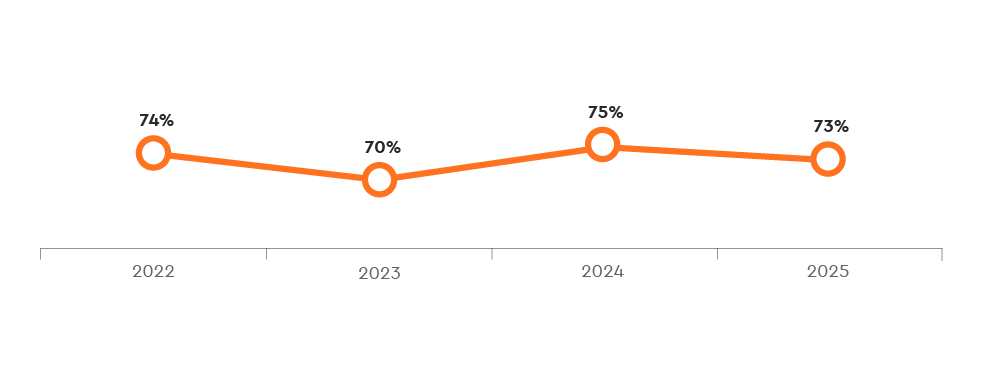
Giving has remained stable with approximately three quarters (73%) of the public saying they donated to charity in the past three months. This is broadly in line with the 75% who gave last year; showing this level of giving to be a dependable benchmark for good causes.
Charities can rely on a similar level of support in the coming months, with 73% saying they are very or somewhat likely to give in the next quarter. Furthermore, more than four fifths (82%) say they are just as – if not more likely – to donate in the next three months, which suggests people are feeling more positive about good causes or perhaps have more disposable income available.
The public’s finances, and disposable income, impact their ability to donate, so it’s encouraging news that the economic landscape seems to be improving. Nearly two thirds (66%) say they feel the same or better off financially versus six months ago. Of this, 23% feel better off and 43% feel about the same compared to 34% who say they feel worse off. This is a stark improvement from 2022 where Donor Pulse found that 58% felt worse off and just 13% felt better off. And this gap is closing increasingly quickly each year. Despite the headlines, the trend indicates that these lines will cross over in a year’s time.
Britain’s most trusted
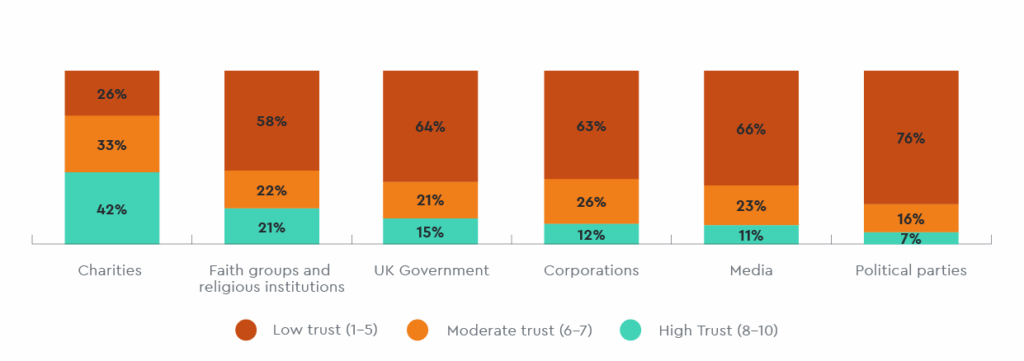
The research shows that public trust in charities is at a healthy level; 75% of people say they have moderate to high trust in charitable organisations, with moderate scored as a six or seven out of ten and high trust at eight or above. This makes charities the most trusted British institution.
When it comes to news or information about good causes, the most trusted source is the charity itself. More than three quarters (77%) of people say they trust information when it comes directly from a charity. The mainstream media is seen as a reputable source of information on charities by six in ten (61%), this drops to 51% for celebrities and 42% for social media.
The trust in charities is extended to how the public wants to donate. More than half (54%) say they prefer donating directly through a charity’s website rather than any other method. This is over four times higher than the next most popular option, consumer giving platforms (13%). Crowdfunders follow at 10% and then social media giving (5%).
“Despite a whole host of economic challenges in recent years, the data suggests that many people are actually starting to feel better off. Combine that with the fact that giving has been remarkably consistent, not just month to month, but year on year, and that should give charities confidence that people will continue to donate. The sector should also take strength from the fact that the public views their work as essential, which is testament to the services they provide.”
“People only give to causes if they trust them, so it’s great to see that charities are the most trusted British institution – and by some distance too! Good causes should be encouraged that the public most trusts information about charities when it comes directly from them. Building and improving your direct communication channels and facilitating donations through your website has never been more important.”
Chester Mojay-Sinclare, Founder and CEO, Enthuse
Support overseas
Overseas aid is an area that is front of mind for many good causes. When asked about the most effective way for the UK to give overseas aid, 68% said that charities are just as or more effective as the government at delivering it. There’s also plenty of support for extra resources being dedicated to helping those further afield, in fact over half (55%) of people say they believe the UK government should increase spending on overseas aid – this rises to three quarters for under 35s. On the other hand, the reverse is true for those over 65 where 62% believe spending on aid should be cut.
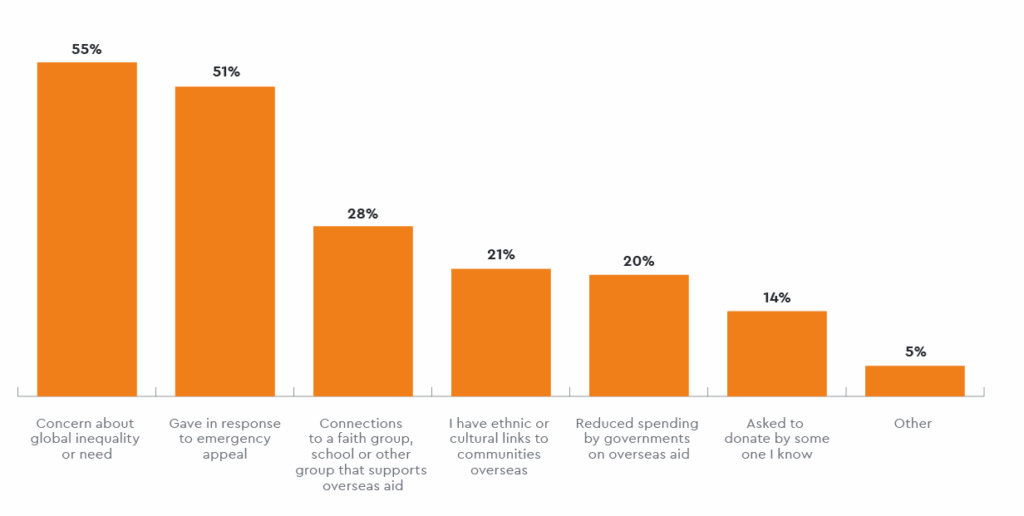
For those who gave to overseas aid charities in the past three months, many were motivated by a sense of inequality. More than half (55%) of those who gave cited concern about global inequality or need. Others say they donated in response to an emergency appeal (51%), this was followed by connections to a faith group or school that supports those overseas (28%), having ethnic or cultural links to communities overseas (21%) and reduced spending in this area by the government (20%).
The research shows us that charities are both trusted and valued – and it also suggests an upturn in the public’s economic situation, all of which bodes well for the near future.
For a complete look at the donor landscape, get your free copy of Donor Pulse 2025.